
Infertility Treatment
Step-by-step fertility evaluation and treatment planning for couples who are trying to conceive.

Infertility treatment starts with finding the reason pregnancy is not happening, not with jumping straight to IVF. If you have been trying for 12 months, or for 6 months if the woman is over 35, a focused fertility evaluation can help identify ovulation problems, sperm issues, blocked tubes, fibroids, endometriosis, hormonal imbalance or unexplained infertility.
When should you consult for infertility?
A fertility consultation is useful when pregnancy has not happened after regular unprotected intercourse for the expected time period. It is also sensible to come earlier if periods are very irregular, there is known PCOS, endometriosis, fibroids, previous pelvic infection, previous surgery, repeated miscarriage or a male-factor concern.
Age matters because egg number and egg quality reduce with time. Waiting too long can reduce the number of treatment choices available later.
- After 12 months of trying if the woman is under 35.
- After 6 months of trying if the woman is 35 or older.
- Sooner if periods are irregular or absent.
- Sooner if there is known endometriosis, fibroids, ovarian cysts or blocked tubes.
- Sooner after repeated miscarriage or previous ectopic pregnancy.
- Sooner if semen analysis is abnormal or there are male sexual health concerns.
Common causes of infertility
Infertility can come from the female partner, male partner, both partners, or sometimes no clear cause is found even after testing. This is called unexplained infertility.
A good infertility specialist looks at both partners. Treating only one side without semen testing, ovulation review and uterine-tube assessment can delay the correct plan.
- Ovulation problems due to PCOS, thyroid imbalance, high prolactin or low ovarian reserve.
- Blocked fallopian tubes after infection, endometriosis, tuberculosis or previous pelvic surgery.
- Endometriosis causing inflammation, adhesions, pain or reduced fertility.
- Fibroids or polyps that distort the uterine cavity.
- Male-factor infertility due to low sperm count, poor movement or abnormal shape.
- Age-related decline in egg quality.
- Unexplained infertility where routine tests are normal but pregnancy is still delayed.
What tests are usually needed?
Infertility testing should be targeted and cost-conscious. The first step is usually history, cycle pattern, ultrasound, ovulation assessment and semen analysis. More tests are added only when they are likely to change the treatment plan.
Both partners should be evaluated because sperm-related factors are common and can change the recommended treatment.
- Cycle history and ovulation tracking.
- Pelvic ultrasound to assess uterus, ovaries, follicles, fibroids, cysts or polyps.
- AMH and antral follicle count to understand ovarian reserve.
- Thyroid, prolactin and other hormone tests when indicated.
- Progesterone test to confirm ovulation in selected cases.
- Semen analysis for sperm count, movement and shape.
- HSG, saline sonography or hysteroscopy if tube or uterine cavity assessment is needed.
- Laparoscopy when endometriosis, adhesions or tubal disease needs direct evaluation.
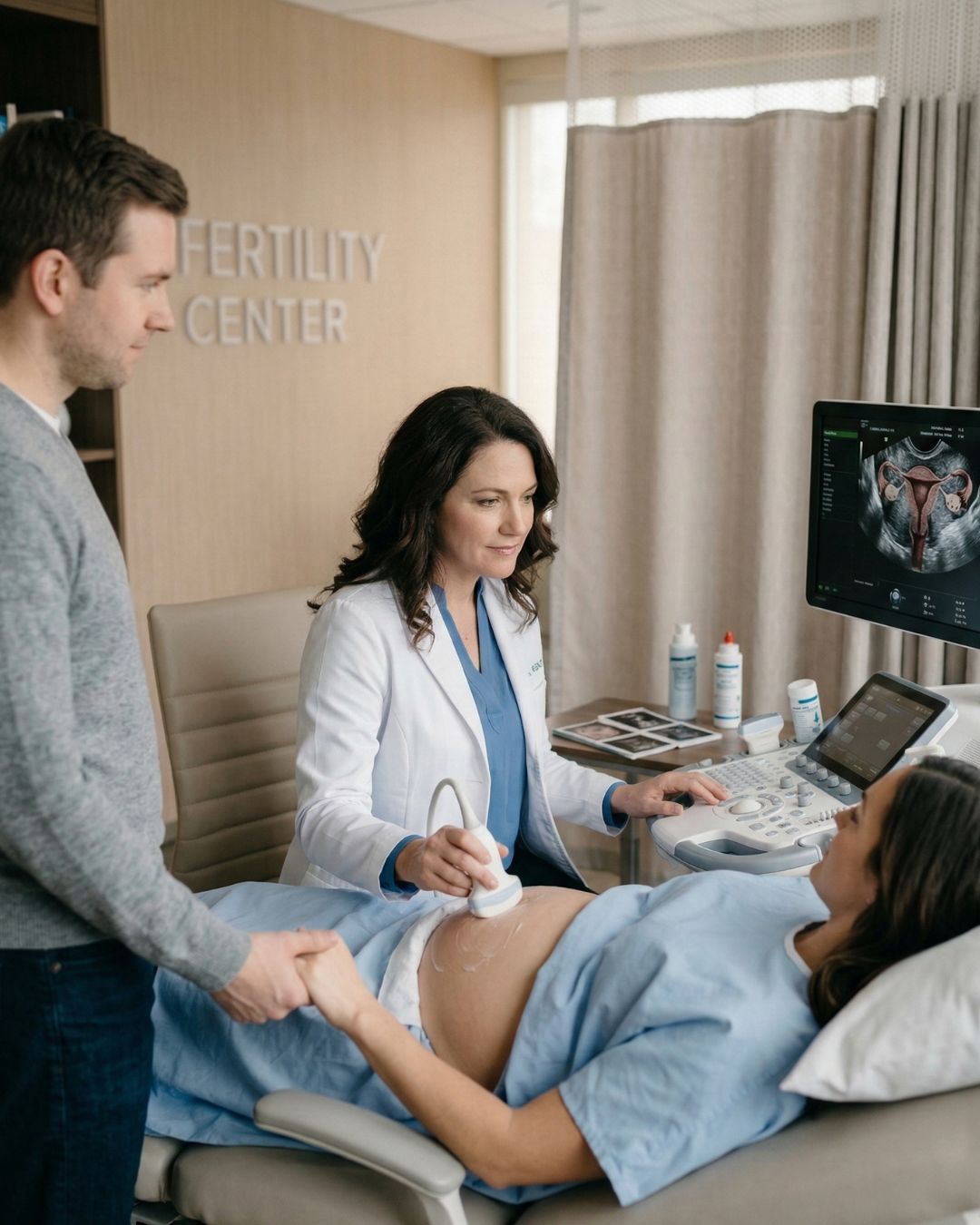
Treatment options for infertility
The right infertility treatment depends on age, duration of trying, ovulation, semen report, tube status, uterine findings and previous treatment attempts. Some couples need simple correction. Some need IUI. Some need IVF. The goal is to choose the least invasive option that still makes clinical sense.
Treatment should also consider emotional stress, time, cost and medical safety.
- Lifestyle correction when weight, smoking, alcohol, sleep or timing of intercourse is affecting fertility.
- Ovulation induction when eggs are not releasing regularly.
- Timed intercourse with ultrasound monitoring in selected early cases.
- IUI treatment when ovulation is happening and sperm parameters are suitable.
- IVF treatment when tubes are blocked, sperm factors are significant, age is higher or previous simpler treatments have failed.
- Hysteroscopy for polyps, adhesions, suspected cavity problems or selected fibroids.
- Laparoscopy for endometriosis, adhesions, tubal concerns, ovarian cysts or pelvic pain linked with infertility.
Where fibroids fit into infertility care
Fibroids are common, but not every fibroid causes infertility. The important questions are where the fibroid is, whether it changes the shape of the uterine cavity, whether it causes heavy bleeding, and whether it may affect implantation or pregnancy.
Submucosal fibroids that project into the uterine cavity are more likely to affect fertility. Some intramural fibroids may also matter depending on size and location. Small fibroids on the outer surface of the uterus may not need treatment before pregnancy.
Infertility, endometriosis and pelvic pain
Endometriosis can affect fertility by causing inflammation, adhesions, ovarian cysts, painful periods or distorted pelvic anatomy. Some patients need medicines, some need fertility treatment and some need surgery.
When surgery is being considered for endometriosis, ovarian cysts or adhesions, a laparoscopic gynecologist can help decide whether minimally invasive treatment may improve symptoms or fertility planning.
When IUI may help
IUI means placing prepared sperm directly inside the uterus around ovulation. It may help in selected cases of mild male-factor infertility, unexplained infertility, ovulation issues after egg development, or when timing intercourse is difficult.
IUI is not suitable for every couple. It usually needs at least one open fallopian tube, reasonable sperm parameters and a clear ovulation plan.
When IVF may be a better option
IVF may be advised when fallopian tubes are blocked, sperm count or movement is very low, ovarian reserve is low, age is higher, endometriosis is severe, or earlier treatments have not worked.
IVF is not a first step for every patient. A good consultation should explain why IVF is needed, what alternatives exist, what success depends on and what the couple should prepare for.
Fertility care with Dr Tripti Raheja
At Raheja Clinic, Dr Tripti Raheja reviews both the medical and practical side of fertility care: age, cycle pattern, ultrasound findings, semen report, previous treatment, emotional stress and how long the couple has already been trying.
As a gynecologist and obstetrician, Dr Tripti Raheja helps couples understand whether they need basic fertility correction, ovulation induction, IUI, IVF referral, hysteroscopy, laparoscopy or treatment for fibroids and endometriosis. The plan is built around diagnosis first, then treatment.
What to bring for your first fertility visit
The first visit becomes more useful when you bring previous reports instead of starting from zero. Even older scans, semen reports or prescriptions can help avoid repeating unnecessary tests.
- Menstrual cycle dates for the last 3 to 6 months.
- Previous ultrasound reports and follicle monitoring records.
- AMH, thyroid, prolactin, hormone tests or other blood reports.
- Semen analysis report of the male partner if available.
- HSG, hysteroscopy, laparoscopy or previous surgery records.
- Details of ovulation medicines, IUI, IVF or fertility treatment already tried.
- History of miscarriage, ectopic pregnancy, endometriosis, fibroids or pelvic infection.
Frequently asked questions
When should we see a doctor for infertility?
You should consider evaluation after 12 months of regular unprotected intercourse if the woman is under 35, or after 6 months if she is 35 or older. Consult earlier if periods are irregular, there is known PCOS, endometriosis, fibroids, previous miscarriage, previous ectopic pregnancy or a male-factor concern.
What are the common causes of female infertility?
Common causes include ovulation problems, PCOS, thyroid imbalance, high prolactin, low ovarian reserve, blocked tubes, endometriosis, uterine polyps, fibroids affecting the uterine cavity and age-related egg-quality decline.
Should both partners be tested?
Yes. Infertility evaluation should include both partners because male-factor infertility is common. A semen analysis is usually one of the basic tests and can change the treatment plan significantly.
What tests are done for female infertility?
Tests may include pelvic ultrasound, ovulation tracking, AMH, hormone tests, thyroid and prolactin tests, progesterone testing, HSG or saline sonography for tubes and uterus, and hysteroscopy or laparoscopy when needed.
Can fibroids cause infertility?
Some fibroids can affect fertility, especially submucosal fibroids that distort the uterine cavity. Not all fibroids need treatment before pregnancy. The decision depends on size, location, bleeding symptoms and fertility history.
Can endometriosis affect fertility?
Yes. Endometriosis can affect fertility through inflammation, adhesions, ovarian cysts and distorted pelvic anatomy. Treatment may involve medicines, fertility treatment, laparoscopy or IVF depending on severity, age and previous attempts.
Is IUI better or IVF better?
IUI and IVF are used for different situations. IUI may help when at least one tube is open, ovulation can be timed and sperm parameters are suitable. IVF may be better for blocked tubes, significant male-factor infertility, low ovarian reserve, higher age or failed previous treatments.
Can infertility be treated without IVF?
Yes. Many couples do not need IVF as the first step. Depending on the cause, treatment may include lifestyle changes, ovulation induction, timed intercourse, IUI, thyroid or prolactin correction, hysteroscopy, laparoscopy or treatment of fibroids and endometriosis.
What is unexplained infertility?
Unexplained infertility means routine tests do not show a clear cause, but pregnancy is still not happening. Treatment can still help and may include ovulation induction, IUI or IVF depending on age, duration of trying and previous attempts.
What should we bring to an infertility consultation?
Bring cycle dates, ultrasound reports, hormone tests, AMH, semen analysis, HSG report, previous fertility treatment records, surgery notes and any history of miscarriage, ectopic pregnancy, fibroids, endometriosis or pelvic infection.
What best describes your fertility concern?
Choose the closest option. The consultation can cover more than one issue.
Book an Appointment
Get the care you deserve. With our expertise and dedication, you can expect nothing but the finest care for all your women's health concerns.
- 29+ years of clinical experience
- Compassionate, patient-first care
- Advanced laparoscopic & robotic surgery